



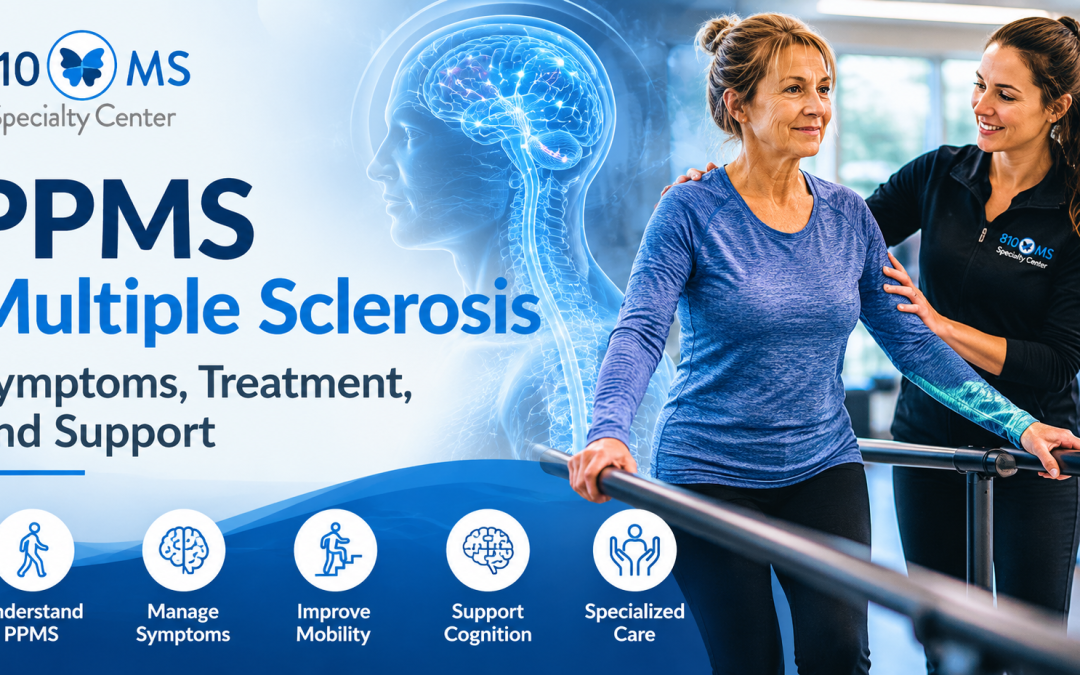
For many people, Primary Progressive Multiple Sclerosis does not begin with a dramatic event. There is no sudden relapse that sends them to the hospital. Instead, the signs often appear gradually.
A person may start avoiding longer walks because one leg feels heavier than the other. They may notice they are reaching for the handrail every time they use the stairs. A trip through the grocery store that once felt effortless now requires several breaks. Months pass, then years, and those small changes become harder to ignore.
This slow progression is what makes PPMS Multiple Sclerosis different from other forms of MS.
While there is currently no cure for PPMS, there are effective ways to manage symptoms, preserve mobility, and maintain independence. The earlier patients receive specialized support, the better their opportunity to stay active and continue doing the things that matter most to them.
At 810 MS Specialty Center, we work exclusively with individuals who have already been diagnosed with multiple sclerosis. Our therapy programs are designed specifically for the challenges people with MS face every day, from walking difficulties and fatigue to balance issues and cognitive changes.
What Is Primary Progressive Multiple Sclerosis?
Primary Progressive Multiple Sclerosis, often called PPMS, is a form of multiple sclerosis in which symptoms gradually worsen from the beginning of the disease.
Unlike Relapsing Remitting MS, people with PPMS usually do not experience clear flare ups followed by periods of recovery. Instead, changes tend to build slowly over time.
Multiple sclerosis affects the central nervous system, including the brain and spinal cord. Damage to the protective covering around nerve fibers can interfere with how signals travel throughout the body. As a result, everyday activities such as walking, balancing, concentrating, or completing routine tasks may become more difficult.
To better understand where PPMS fits within the broader MS spectrum, visit our guide on different types of MS.
Who Is Most Likely to Develop PPMS?
PPMS accounts for approximately 10 to 15 percent of all multiple sclerosis cases.
Many people are diagnosed between the ages of 40 and 60. Unlike some other forms of MS that affect women more frequently, PPMS affects men and women at more similar rates.
Because PPMS is commonly diagnosed later in life, many patients wonder whether what they are experiencing is related to aging or something more significant.
Our articles on aging and MS provide additional information:
What happens with MS as you age
Early Signs of PPMS Multiple Sclerosis
One challenge with PPMS is that symptoms often develop so gradually that people adapt to them before realizing something is wrong.
Many patients tell us they spent months making small adjustments to their routine before seeking medical attention.
Changes in Walking
Walking changes are among the most common early symptoms.
Some people notice that one foot drags slightly when they are tired. Others find themselves slowing down to keep pace with friends or family during walks.
A patient may begin avoiding uneven ground because they feel less stable than they used to.
Unusual Fatigue
MS fatigue is not simply feeling tired after a busy day.
Patients often describe it as an overwhelming loss of energy that arrives unexpectedly. Someone who previously worked all day and then exercised in the evening may suddenly find that a few errands leave them exhausted.
Learn more about managing fatigue:
What Helps with Multiple Sclerosis Fatigue? Expert Strategies for MS Patients
Balance Problems
Many people notice balance changes before significant weakness develops.
Simple situations such as stepping off a curb, turning quickly, or walking through a crowded area may feel more challenging.
Cognitive Changes
Some individuals experience subtle cognitive symptoms, including:
-
Difficulty concentrating during conversations
-
Forgetting details that were once easy to remember
-
Taking longer to process information
-
Feeling overwhelmed when multitasking
Specialized cognitive therapy can help address these concerns.
What We Commonly See in Patients With PPMS
One misconception about PPMS is that progression always means rapid disability.
That is not what we typically see.
Many patients arrive at our clinics because they have stopped doing activities they enjoy. Some have given up neighborhood walks because they no longer feel confident about their balance. Others avoid family outings because fatigue has become difficult to manage.
In many cases, the goal is not simply to improve strength or balance scores during therapy sessions. The goal is helping someone return to activities that make life meaningful.
For one patient, that may mean walking through a shopping center without needing frequent breaks. For another, it may mean safely navigating stairs at home. Someone else may want enough endurance to attend a grandchild’s sporting event without feeling completely exhausted afterward.
These are the types of goals that often drive successful MS rehabilitation.
Common Symptoms of PPMS
Symptoms vary from person to person, but several challenges appear frequently.
Mobility Difficulties
Walking often becomes more difficult as PPMS progresses.
Patients may experience weakness, stiffness, reduced endurance, or changes in coordination that affect how they move.
Gait training programs can help improve walking efficiency and reduce fall risk.
Muscle Tightness and Spasms
Muscles may become stiff or tighten unexpectedly.
This can affect comfort, mobility, sleep quality, and daily function.
Additional information is available here:
Muscle Spasms in Multiple Sclerosis: Treatment and Support
Fatigue
Fatigue remains one of the most common symptoms reported by people with PPMS.
Unlike ordinary tiredness, MS fatigue can affect physical activity, concentration, productivity, and social participation.
Balance and Coordination Challenges
Changes in balance can increase the risk of falls and reduce confidence during daily activities.
Balance rehabilitation programs focus on helping patients move more safely and confidently.
How Is PPMS Diagnosed?
Because symptoms often develop gradually, diagnosis may take time.
Neurologists typically use several tools to confirm PPMS.
Medical History
Providers review symptom progression over an extended period, usually at least one year.
MRI Imaging
MRI scans help identify areas of damage within the brain and spinal cord that are consistent with multiple sclerosis.
Neurological Examination
A neurological examination may evaluate:
-
Strength
-
Reflexes
-
Balance
-
Sensation
-
Coordination
-
Walking ability
Additional Testing
Some patients may undergo spinal fluid testing, evoked potential studies, or blood tests to rule out other neurological conditions.
Conditions such as ALS can sometimes create confusion during the diagnostic process.
Learn more:
Is ALS the Same as MS? Understanding the Key Differences
Understanding PPMS Progression
Every person’s experience with PPMS is different.
What we frequently tell patients is that progression should not be viewed as a prediction of what will happen tomorrow, next month, or even next year.
Some individuals experience gradual changes over decades. Others notice more significant challenges over shorter periods.
What matters most is staying proactive.
Many patients who participate in ongoing therapy develop strategies that help them stay active longer, move more efficiently, and maintain independence despite changes in symptoms.
Additional information can be found here:
Understanding MS Progression Stages: What Quincy, MA Patients Should Know
PPMS Multiple Sclerosis Treatment Options
Physical Therapy
Physical therapy is one of the most important tools available for many people with PPMS.
Therapy often focuses on improving walking efficiency, maintaining flexibility, building strength, and reducing fall risk.
For example, a therapist may work with a patient on safely navigating curbs, recovering balance after a stumble, improving stair negotiation, or conserving energy during longer activities.
Learn more:
Physical Therapy for MS: Improve Mobility, Reduce Pain, and Enhance Quality of Life
Occupational Therapy
Occupational therapy helps people remain independent during everyday activities.
Treatment may focus on energy conservation strategies, home safety, daily routines, and adapting tasks that have become more difficult.
Cognitive Therapy
Cognitive rehabilitation can help address memory, attention, and processing challenges.
Cognitive Therapy for MS Patients in Waltham: Enhance Mental Clarity & Daily Function
Maintenance Therapy
Many patients assume therapy ends once a treatment plan is completed.
For progressive conditions such as PPMS, ongoing maintenance therapy can play an important role in preserving gains and slowing functional decline.
Maintenance Therapy for MS in Waltham: Why Ongoing Care Matters
Mental Health Support
Many patients struggle with uncertainty after diagnosis.
Questions about future mobility, employment, family responsibilities, and independence can create significant emotional stress.
Comprehensive MS care should address both physical and emotional well being.
Learn More: Why Mental Health Support is Essential in MS Care
Specialized PPMS Care in Waltham and Northborough, MA
People living with PPMS often benefit from working with providers who understand the unique challenges associated with multiple sclerosis.
810 MS Specialty Center provides specialized MS rehabilitation services throughout Massachusetts, including our Waltham and Northborough locations.
Patients seeking comprehensive therapy services can learn more here:
Waltham:
MS Therapy Center in Waltham
Northborough:
MS Therapy Center in Northborough, MA
Why Choose 810 MS Specialty Center?
Multiple sclerosis is not one of the many conditions we treat.
It is our primary focus.
Every member of our team works with individuals who have MS, allowing us to develop programs specifically designed for the challenges associated with this condition.
Our patients often come to us looking for practical improvements. They want to walk more confidently, reduce fall risk, improve endurance, stay active in their communities, and maintain independence for as long as possible.
Our services include:
-
Physical therapy
-
Occupational therapy
-
Cognitive therapy
-
Balance rehabilitation
-
Gait training
-
Neuromuscular reeducation
-
Maintenance therapy
Frequently Asked Questions About PPMS Multiple Sclerosis
What does PPMS stand for?
PPMS stands for Primary Progressive Multiple Sclerosis, a form of MS characterized by gradual worsening of symptoms from disease onset.
What are the earliest signs of PPMS?
Common early symptoms include walking difficulties, balance problems, fatigue, leg weakness, and subtle cognitive changes.
Is PPMS different from Relapsing Remitting MS?
Yes. PPMS typically involves steady progression of symptoms without the distinct relapses and remissions seen in Relapsing Remitting MS.
Can PPMS be treated?
While there is no cure, medications, rehabilitation therapies, and symptom management strategies can help improve function and quality of life.
Does physical therapy help people with PPMS?
Yes. Physical therapy can help maintain mobility, improve balance, increase safety, and support independence.
Can PPMS affect memory and concentration?
Yes. Some people experience difficulties with attention, memory, processing speed, and multitasking.
Will everyone with PPMS eventually need a wheelchair?
No. Disease progression varies significantly between individuals, and many people remain mobile for years after diagnosis.
Why is fatigue so common in PPMS?
Damage within the central nervous system can make everyday activities require more effort, contributing to significant fatigue.
Why is specialized MS therapy important?
MS specific therapists understand the unique movement, balance, cognitive, and endurance challenges associated with multiple sclerosis.
Where can I find specialized PPMS care in Massachusetts?
810 MS Specialty Center provides specialized MS therapy services in Waltham, Northborough, and other Massachusetts locations.